The Valley Spirit Never Dies: What Tao Te Ching Chapter 6 Really Means
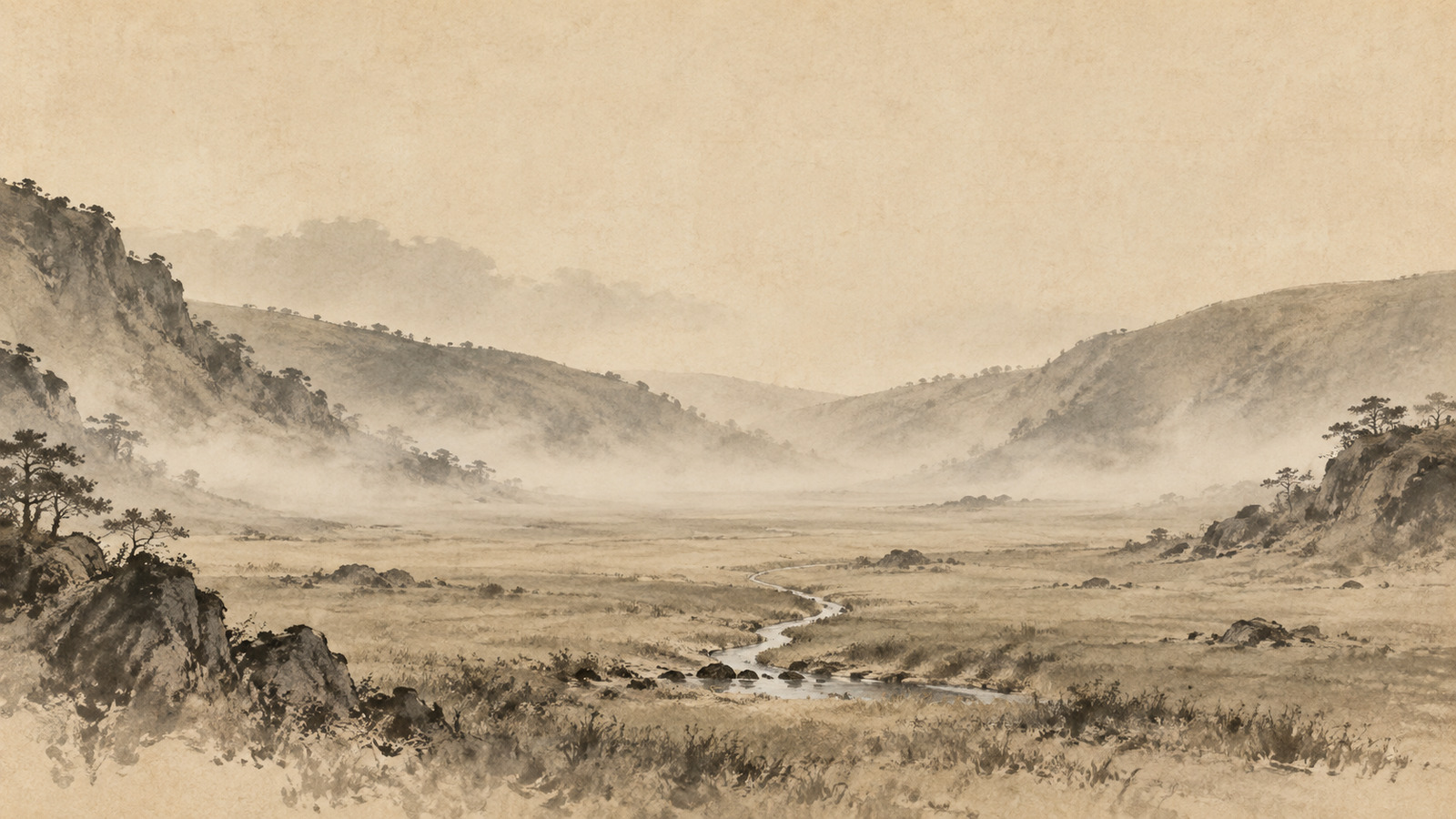
When you meet Chapter 6’s claim that the valley spirit never dies and is called the mysterious female, you are not collecting a slogan about gendered branding or a mood of vague mystery. You are meeting a judgment: an empty valley can remain a living source, and receptivity can outlast the push to fill every gap. Your question is practical: what does using that source without strain ask of you when force looks more serious than staying open?
The valley spirit never dies
When Chapter 6 opens with 谷神不死,是谓玄牝, you are being shown a valley spirit that does not die, and a name for it: the mysterious female. The valley is low and open; it does not crown itself as the peak. Softness here is not a costume of mystery. It is the empty place that keeps receiving. Your honesty deepens when you ask whether today’s need to be full has crowded out the open ground the chapter treats as still alive.
You can test this in ordinary rooms. If every silence must be filled with a plan, you have treated emptiness as a failure. If you leave one margin where nothing is forced, you are nearer the chapter’s image of a valley that still holds. Your measure is not how mystical the phrase sounds. It is whether you can stay with an empty place without rushing to occupy it.
The gate is called the root
When you read that the gate of the mysterious female is called the root of Heaven and Earth, you meet a claim about source, not about a hidden club. 玄牝之门,是谓天地根 names a doorway things pass through, the way a valley mouth lets weather through without owning it. Softness is receptivity that keeps giving rise, not a private secret you hoard. Your week clarifies when you notice one place you tried to be the origin by force, then ask what would change if you were the opening instead.
You should not turn “root of Heaven and Earth” into a cosmology you cannot check on the page. The living translation keeps the line short: the gate is called the root. Softness is knowing that source and use belong together: what never dies is drawn on, not displayed as a trophy. Your honesty matters when you ask whether this week’s creativity is still a root you can return to, or only a performance of depth.
Continuous, subtle, it seems to exist
When the chapter says it is continuous and subtle, and that it seems to exist, you meet a presence that does not shout its proof. 绵绵若存 is a thin continuity, like a thread you almost miss, not a monument you can point to for status. Softness is trusting a source that remains while looking faint. Your grip softens when you stop demanding that what nourishes you also look impressive before you will rely on it.
Use it without grinding the source
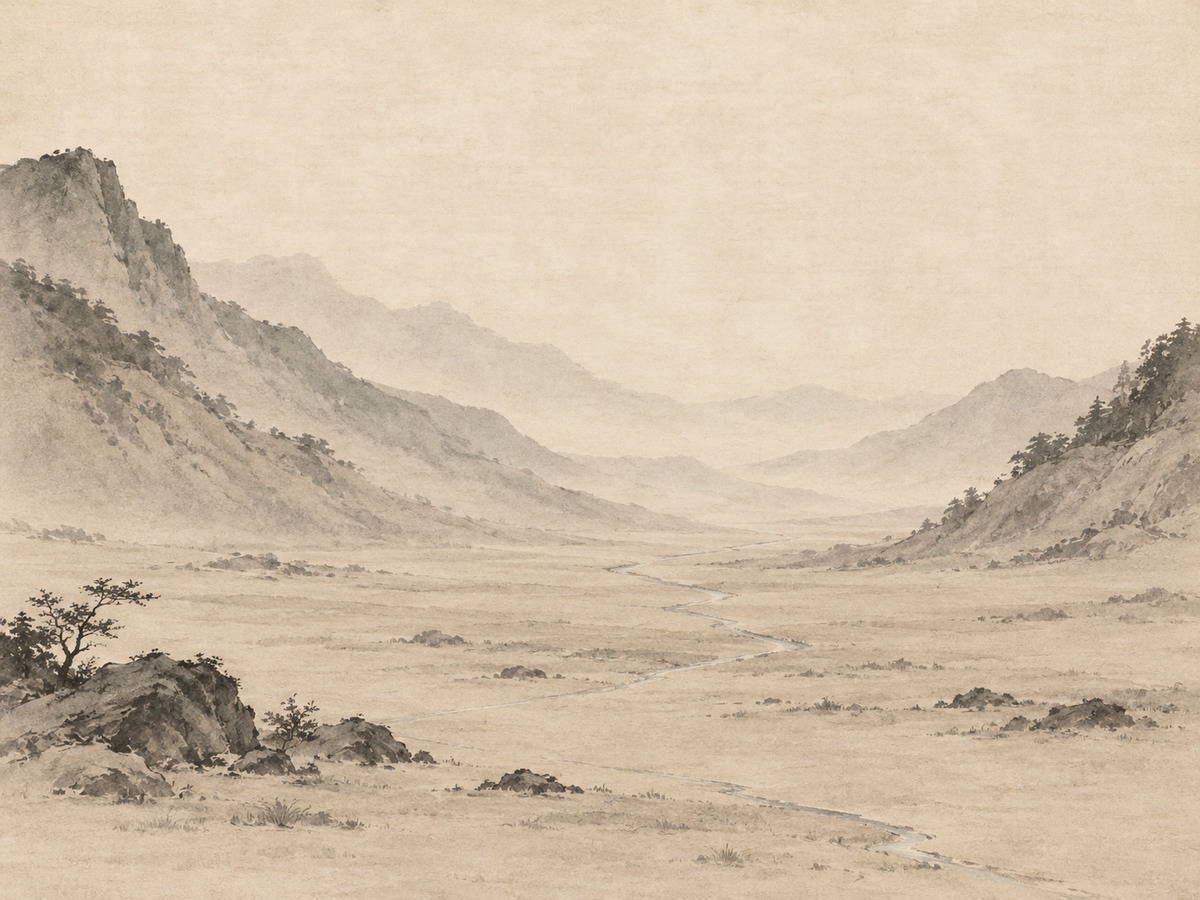
When you are told to use it effortlessly, you meet the chapter’s last line, 用之不勤. The living page’s translation says “Use it effortlessly,” a drawing on the source without grinding it, not a holiday from the work in front of you. Softness is using the valley’s openness so the source is not worn out by strain. Your sitting deepens when you notice one place you kept forcing a result, then ask what a lighter use would change in the next small step.
What this page will not do
You will not find here a translation-choice guide, a Chapter 1 remake, a Chapter 8 water essay, a Chapter 11 emptiness remake, a Chapter 33 knowing-others remake, a Chapter 63 act-without-acting remake, or the site’s wu-wei pillar restated. You will not find Sun Tzu strategy, yin-yang merch talk, sales language, or invented search rankings. This essay stays with the valley spirit, the mysterious female, the gate as root, and a use that does not strain, so you can practice one chapter deeply. Your next step is still the living chapter page, not another slogan card.
FAQ
What does “the valley spirit never dies” mean for you in Chapter 6?
You are being shown that 谷神不死 names a low, open source that does not die, and that the chapter calls it the mysterious female. The line is not a brand of feminine mystique and not a promise that you will never feel empty. Softness is letting the valley stay a valley: receptive, unforced, still able to give. Your test is whether today’s rush to fill every gap still leaves one place you can return to without wearing it out.
What is the gate of the mysterious female asking of you?
You meet 玄牝之门 as a gate called the root of Heaven and Earth, a source things come through rather than a secret you possess. The chapter does not ask you to perform mystery. Softness is staying open the way a valley mouth stays open, so life can pass without your grip closing the door. Your reading stays honest when “root” means a place you can draw from, not a title you claim.
How should you hear “continuous, subtle, it seems to exist”?
You are invited to notice a continuity that is easy to miss: 绵绵若存, continuous and subtle, as if it exists. Softness is not ignoring what is faint. It is refusing to trust only what shouts. Your week clarifies when you name one quiet support you keep overlooking because it does not look like achievement, then ask whether it is still there when you stop straining.
Does “use it effortlessly” mean you should do nothing?
You are not being told to abandon the task. “Use it effortlessly” renders 用之不勤: draw on the source without grinding effort, not a ban on showing up. Softness is pairing real use with less strain so the valley is not exhausted by your push. Your check is simple: after you call something important, did you also try to force the source to look busy?
How is Chapter 6 different from a “divine feminine” poster?
You often meet cards that keep “mysterious female” and drop the valley, the gate, the root, and the unforced use. Chapter 6 is stricter: 谷神不死 opens the image; 玄牝之门 and 绵绵若存 keep it from becoming a mood. Softness without the empty valley becomes wallpaper. Your reading stays honest when the full short chapter, not a single pretty name, guides the week.
How should you practice Chapter 6 this week?
You can sit once with one place you keep forcing and ask where the valley is still open. Take one small step that uses the source without grinding it, and notice whether receptivity changes the next hour. Watch one gap you almost filled just to feel in control. Your week becomes the lab: stay with the empty place, treat it as a root, use it lightly, then stop when the day is enough.
Read Chapter 6 on the living page
When you are ready to sit with the Chinese, the translation, and the chapter’s own lines—not another paraphrase—open The Mystic Feminine and read Chapter 6 slowly once. You are checking whether the valley spirit softens forced fullness or only decorates it. Let one short sitting show you if an open source, used without strain, can reshape how you meet the next empty hour.