The Utility of Emptiness: What Tao Te Ching Chapter 11 Really Means
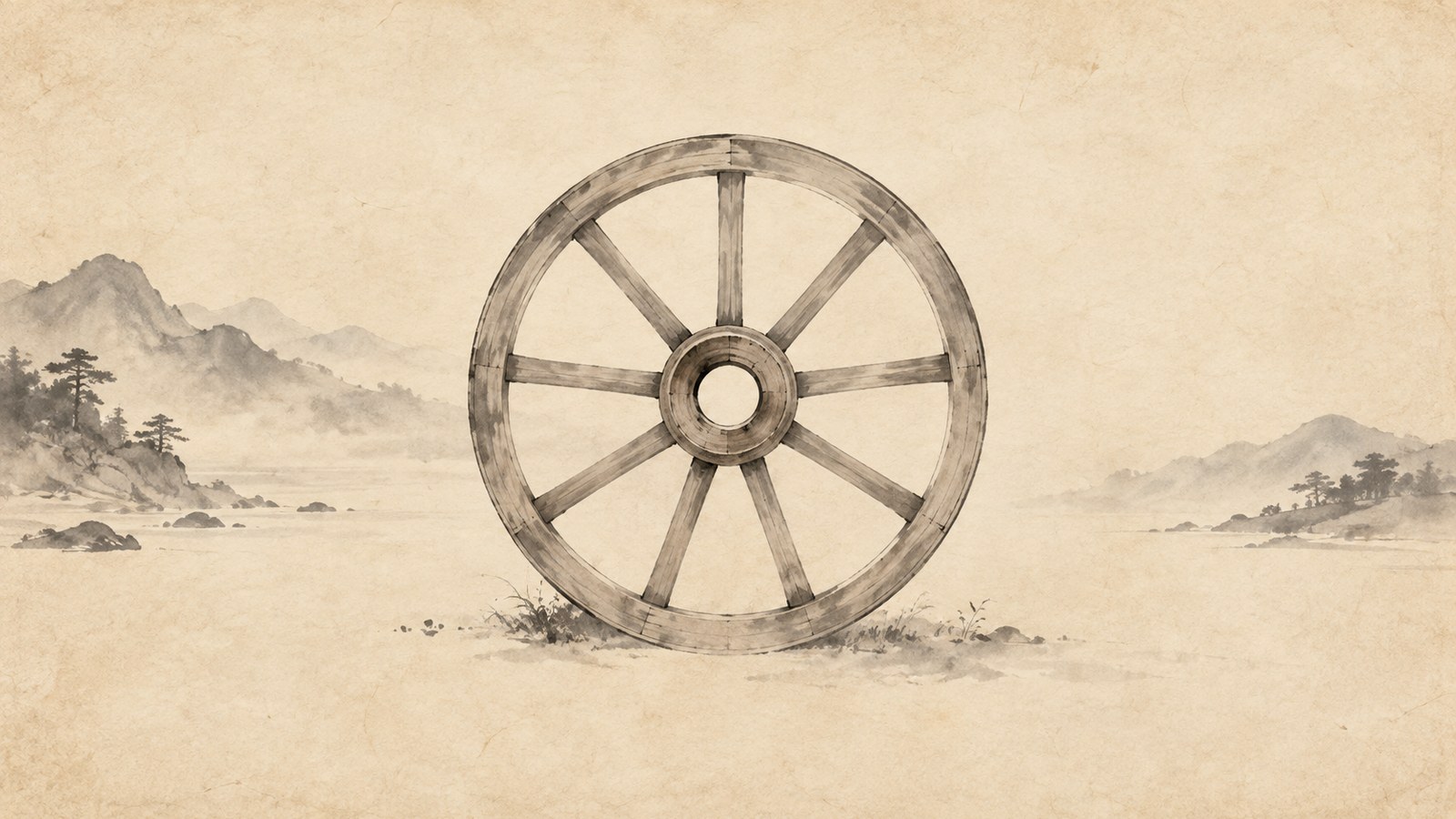
When you meet Chapter 11’s claim that usefulness arises from what is not there—spokes around an empty hub, clay shaped around a hollow, doors and windows cut for a room—you are not collecting a clever life-hack about “leaving space.” You are meeting 無 as utility and 有 as the solid that enables it. Your question is practical: what does emptiness ask of you when form alone feels finished?
What emptiness and utility ask of you
When Chapter 11 pairs 有 with 無—what is present gives profit, what is absent gives use—you are being shown a working pair, not a slogan contest. The solid spokes, clay, and walls matter; without them there is no vessel to hollow. Softness here is noticing that your finished form is not yet the usefulness. Your reading deepens when you stop treating empty as waste and start treating it as the part that lets the thing work.
You can test this in ordinary filling. If every hour, shelf, and conversation is packed until nothing can enter, you have maximized 有 and starved 用. If you leave a soft opening—silence, rest, an unclaimed center—you are nearer the chapter’s claim. Your measure is not how much you accumulate; it is whether the hollow still does its quiet work.
Spokes and hub: the empty center that moves you
When thirty spokes share one hub, and the emptiness at the center makes the cart useful, you are not being asked to romanticize wheels. You meet a simple machine: the solid spokes gather; the hollow receives the axle; motion depends on both. Without the empty nave, your beautiful rim is only decoration. Your day clarifies when you notice where you keep polishing spokes while ignoring the open center that would let the whole thing turn.
You should not treat the hub’s emptiness as a motivational poster about “letting go of everything.” Chapter 11 keeps the spokes. Softness is knowing that structure and hollow cooperate. Your honesty matters when you ask whether this week’s schedule still has a hub—or only a crowd of solid plans with nowhere for the axle to pass.
The clay vessel: hollowness that holds
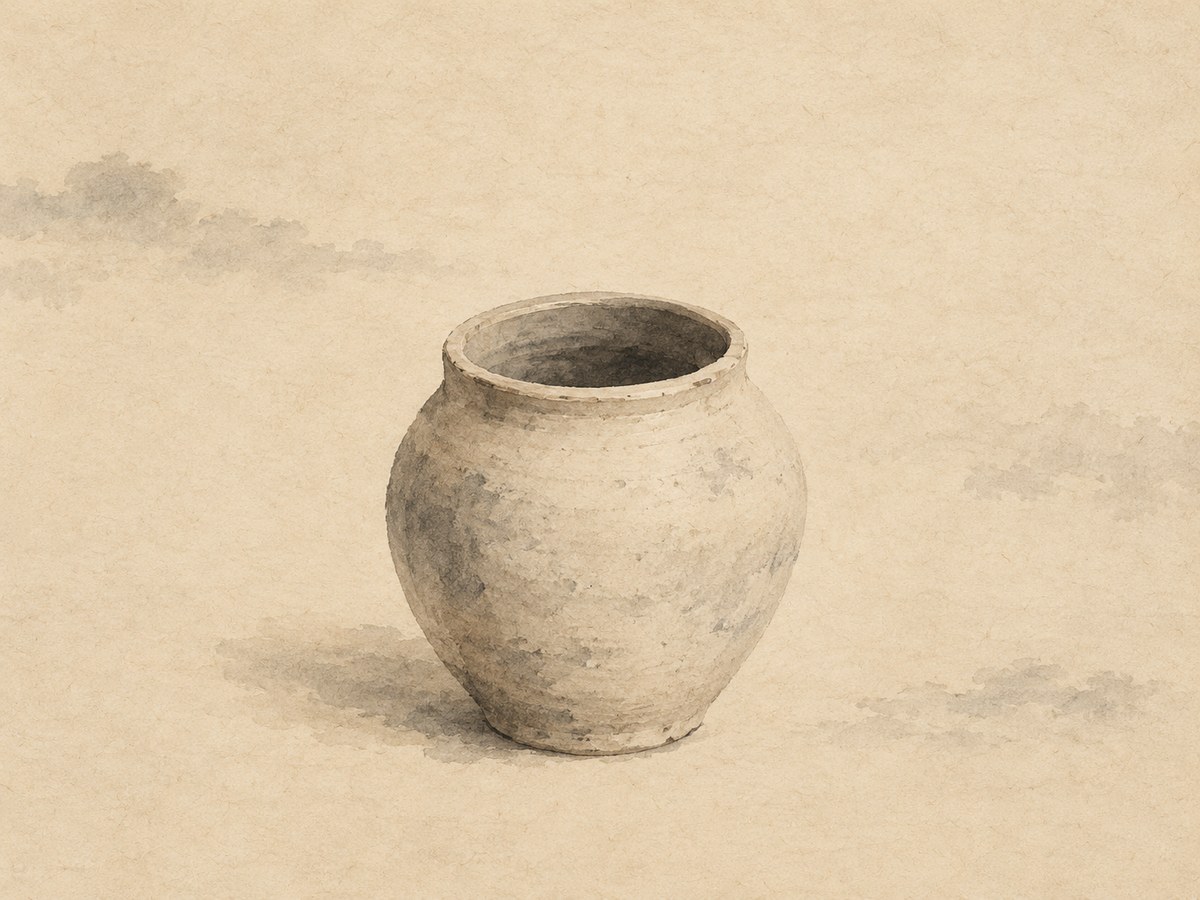
When clay is molded into a vessel, and the emptiness within makes it useful, you meet the same teaching in a quieter shape. The walls give you form and profit; the hollow gives you use—water, grain, breath, whatever the day needs to hold. You are not forbidden to shape; you are asked not to fill the vessel so completely that nothing can enter. Your grip softens when you let the useful hollow remain a working space, not a trophy of finished clay.
Doors, windows, and the room you live in
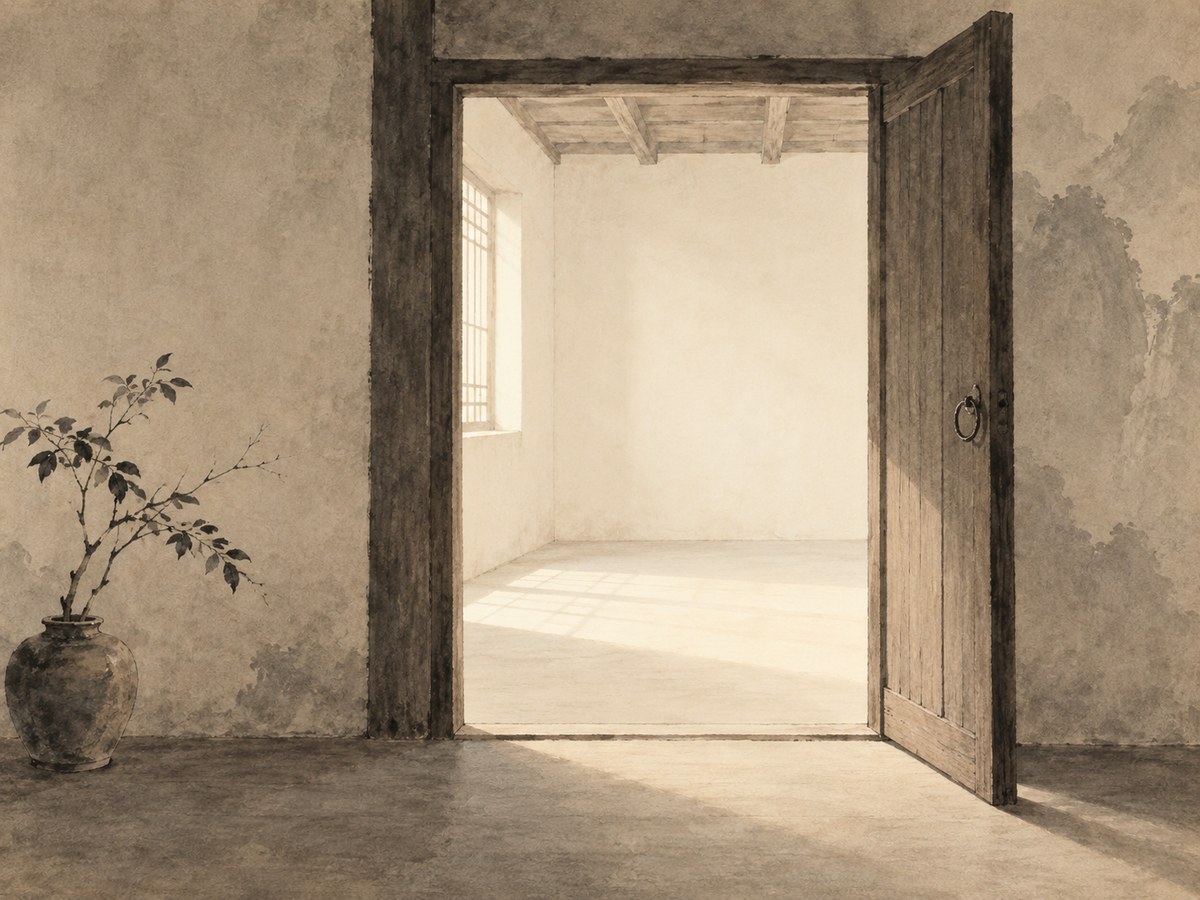
When doors and windows are cut for a room, and emptiness makes the room useful, you are shown walls that admit light, air, and passage. A sealed box of solid matter is not a dwelling you can live in. Softness here is the opening: the cut that looks like loss is what makes shelter work. Your sitting deepens when you notice one place in your rooms—or your calendar—where you have built walls without windows, then ask what small cut would restore use.
What this page will not do
You will not find here a translation-choice guide, a Ch.1 remake, a Ch.8 water essay, or the site’s wu-wei pillar restated. You will not find Sun Tzu strategy, yin-yang merch talk, buy language, or invented search rankings. This essay stays with spokes, vessel, room, and 有之以为利,无之以为用 so you can practice one emptiness deeply. Your next step is still the living chapter page—not another slogan card.
FAQ
What does “the utility of emptiness” mean for you in Chapter 11?
You are being shown that usefulness often comes from what is not filled—the hub’s hollow, the vessel’s interior, the room’s openings. Form (有) gives advantage; emptiness (無) gives use. The chapter is not a ban on building or owning. Your test is whether the solid parts you keep polishing still leave a working hollow, or whether you have packed the center until nothing can move.
How should you hold 有 and 無 together?
You meet 有 as the present form—spokes, clay, walls—and 無 as the absence that makes those forms useful. Chapter 11 does not ask you to discard structure for blankness. Profit and utility cooperate: without walls there is no room; without openings the room cannot live. Your reading stays honest when both remain in view—not as rival slogans, but as one teaching in two roles.
What are the spokes and hub asking of you?
You are invited to see a wheel that works because solid spokes gather around an empty center. The hub’s hollowness receives the axle; without it, motion fails. Softness is not abandoning the spokes—it is refusing to treat a crowded center as strength. Your week clarifies when you notice one place where everything is solid and ask what empty nave would let the cart turn again.
Does emptiness mean you should want less stuff forever?
You are not being ordered into blank minimalism for its own sake. Emptiness here is functional hollowness—space that holds, admits, and moves—not a moral scoreboard about ownership. You can shape vessels, keep rooms, and plan days without filling every hollow shut. Your check is simple: after you “improve” a thing, can it still receive what it was made to hold?
How is Chapter 11 different from a “leave space in your life” poster?
You often meet modern cards that keep the vibe and drop the three machines: wheel, vessel, room. Chapter 11 is stricter: thirty spokes and one hub; molded clay; cut doors and windows; then 有 for profit, 無 for use. Softness without those constraints becomes lifestyle wallpaper. Your reading stays honest when the full chapter—not a single pretty line—guides the week.
How should you practice Chapter 11 this week?
You can sit once with the three images and notice where you rush to fill every hub, vessel, and room. Leave one short block empty on purpose—not as performance, but as a working hollow. Watch one object or hour you keep packing, and ask whether usefulness still needs absence. Your week becomes the lab: build when needed, leave the center open, then stop when the day is enough.
Read Chapter 11 on the living page
When you are ready to sit with the Chinese, translation, and the chapter’s own key lines—not another paraphrase—open The Utility of Emptiness and read Chapter 11 slowly once. You are checking whether 当其无 softens forced filling or only decorates it. Let one short sitting show you if spokes, vessel, and room can reshape how you meet useful emptiness tomorrow.