Act Without Acting: What Tao Te Ching Chapter 63 Really Means
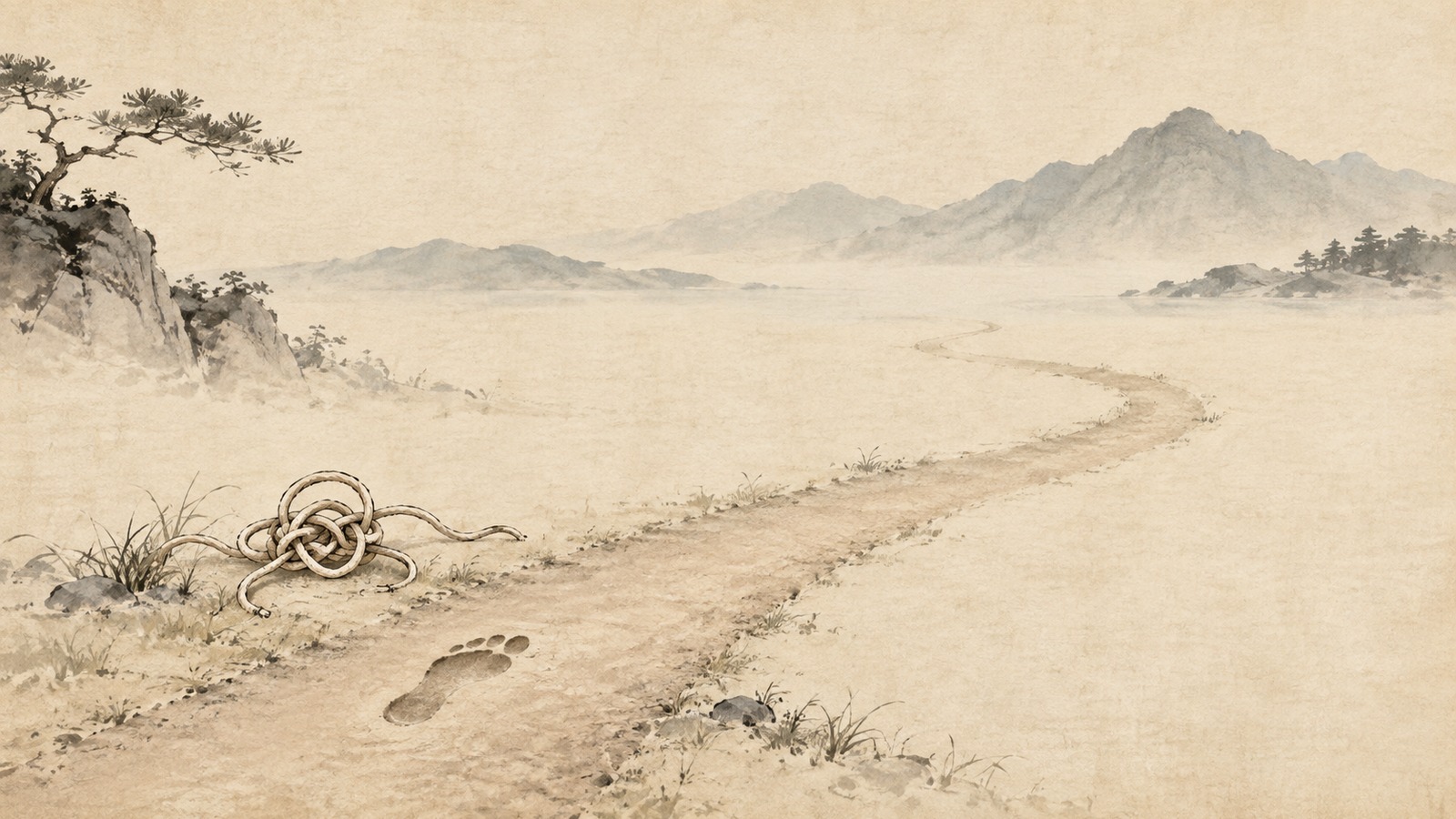
When you meet Chapter 63’s claim that you act without acting, work without doing, and taste without tasting—and that you plan for the difficult while it is easy—you are not collecting a slogan about “effortless hustle.” You are meeting a judgment: start where the knot is still soft, treat difficulty as real, and refuse the light promise that breeds little trust. Your question is practical: what does treating everything as difficult ask of you when ease looks cheaper?
Act without acting; work without doing
When Chapter 63 opens with 为无为, 事无事, 味无味, you are being shown action that does not strain for display, work that does not invent trouble, and taste that does not chase flavor for its own sake. Softness here is not blank idle; it is refusing to force an outcome that would grow louder than the task. Your honesty deepens when you ask whether today’s push is still work—or only a performance of greatness that the chapter later warns against.
You can test this in ordinary starts. If every morning begins with a grand vow and little first motion, you have maximized noise and starved the small. If you keep one quiet step where the knot is still easy to touch, you are nearer the chapter’s second half. Your measure is not how impressive the promise sounds; it is whether the work still begins without forcing.
Plan for the difficult while it is easy
When you plan for the difficult while it is easy, and do the great while it is small, you meet a simple machine of timing. Outer hurry can wait until the problem has swollen, then call panic “seriousness.” Inner readiness is quieter: you notice the fine place where the hard thing still yields, and you work there. Softness is not shrinking ambition—it is refusing to meet greatness only after it has become a crisis. Your week clarifies when you spot one place where “later, when I’m ready” has replaced starting while the task is still small.
You should not treat 图难于其易 as a productivity hack about micro-tasks forever. Chapter 63 keeps greatness in view; it simply places greatness inside the fine work (为大于其细). Softness is knowing that easy and difficult cooperate differently: one is the window; the other is what arrives if you miss it. Your honesty matters when you ask whether this week’s schedule is only a contest with scale—or also a practice of attending to the easy before it hardens.

Greatness that does not strive; promises that hold
When the sage never strives for greatness and thus can achieve greatness, you are shown a further claim that keeps the chapter from becoming mere small-talk. 终不为大 is not a ban on large work; it is refusing to chase “great” as a trophy that empties trust. Softness is staying with the fine step so the large can form without forced display. Your grip softens when you let greatness remain a result of careful starts—not a loud label you pin on yourself before the work has begun.
When light promises breed little trust, and much ease leads to much difficulty, you meet the warning that sits beside 为无为. Easy talk is not the same as starting while things are easy. Softness here is the refusal to say yes lightly, then discover that ease has turned into a stack of hard debts. Your sitting deepens when you notice one promise you almost made for speed, then ask what smaller, truer start would still hold.
The sage treats everything as difficult

When the sage treats everything as difficult and thus never encounters difficulty, you meet the chapter’s closing judgment about care. 犹难之 is not chronic anxiety; it is sober respect for what can go wrong if you call it easy too soon. Softness here is the refusal to trade caution for a cheap feeling of control. Your week becomes clearer when you notice one place you labeled “simple,” then ask what treating it as difficult would change in your first step—not your fear, but your readiness.
What this page will not do
You will not find here a translation-choice guide, a Ch.1 remake, a Ch.8 water essay, a Ch.11 emptiness remake, a Ch.33 knowing-others remake, or the site’s wu-wei pillar restated. You will not find Sun Tzu strategy, yin-yang merch talk, buy language, or invented search rankings. This essay stays with act-without-acting, plan-while-easy, do-while-small, light promises, and treating difficulty as real so you can practice one chapter deeply. Your next step is still the living chapter page—not another slogan card.
FAQ
What does “act without acting” mean for you in Chapter 63?
You are being shown that action can stay free of forced striving—为无为, 事无事, 味无味—while still doing real work. The chapter does not ban effort; it refuses the loud push that pretends greatness is won by strain alone. Softness is attending to the easy and the small so difficulty never has to become a crisis. Your test is whether today’s “big move” still leaves room for one quiet first step that is already hard enough.
How should you hold “plan while easy” and “do while small” together?
You meet plan-for-the-difficult-while-easy as timing, not as cowardice: you face the knot while it is still soft, and you do the great while it is still small. Chapter 63 does not ask you to wait forever. Softness and readiness cooperate: starting small is not shrinking the task—it is refusing to meet it only after it has swollen. Your reading stays honest when both remain in view—begin early, and treat the small as already serious.
What are the world’s hard and great tasks asking of you?
You are invited to see that the world’s hard tasks arise from easy ones, and great tasks from fine ones. Softness is not ignoring scale—it is refusing to skip the fine work that would have kept the hard from exploding. Your week clarifies when you name one “later” that is only delay in disguise, then ask what small step would still count as treating the difficulty as real.
Does treating everything as difficult mean you should worry without rest?
You are not being ordered into bleak worry. 圣人犹难之 names a sober habit: the sage treats matters as difficult and thus meets less sudden difficulty—not a ban on calm. Softness is pairing care with starting small so caution does not become paralysis. Your check is simple: after you call something easy, have you also made a light promise that will breed little trust?
How is Chapter 63 different from a “just start small” poster?
You often meet modern cards that keep “act without acting” and drop the rest: plan while easy, do while small, never strive for greatness, light promises, treat everything as difficult. Chapter 63 is stricter: 为无为 opens the door; 图难于其易 and 犹难之 keep the practice honest. Softness without those constraints becomes lifestyle wallpaper. Your reading stays honest when the full chapter—not a single pretty line—guides the week.
How should you practice Chapter 63 this week?
You can sit once with one task that feels large and ask where it is still easy and small. Take one first step there—without a loud vow—and notice whether treating it as difficult softens forced speed. Watch one light promise you almost made, and ask whether trust would survive it. Your week becomes the lab: begin early, stay with the fine work, treat difficulty as real, then stop when the day is enough.
Read Chapter 63 on the living page
When you are ready to sit with the Chinese, translation, and the chapter’s own key lines—not another paraphrase—open Act Without Acting and read Chapter 63 slowly once. You are checking whether 图难于其易 softens forced greatness or only decorates it. Let one short sitting show you if starting small and treating difficulty as real can reshape how you meet work tomorrow.