Highest Good Like Water: What Tao Te Ching Chapter 8 Really Means
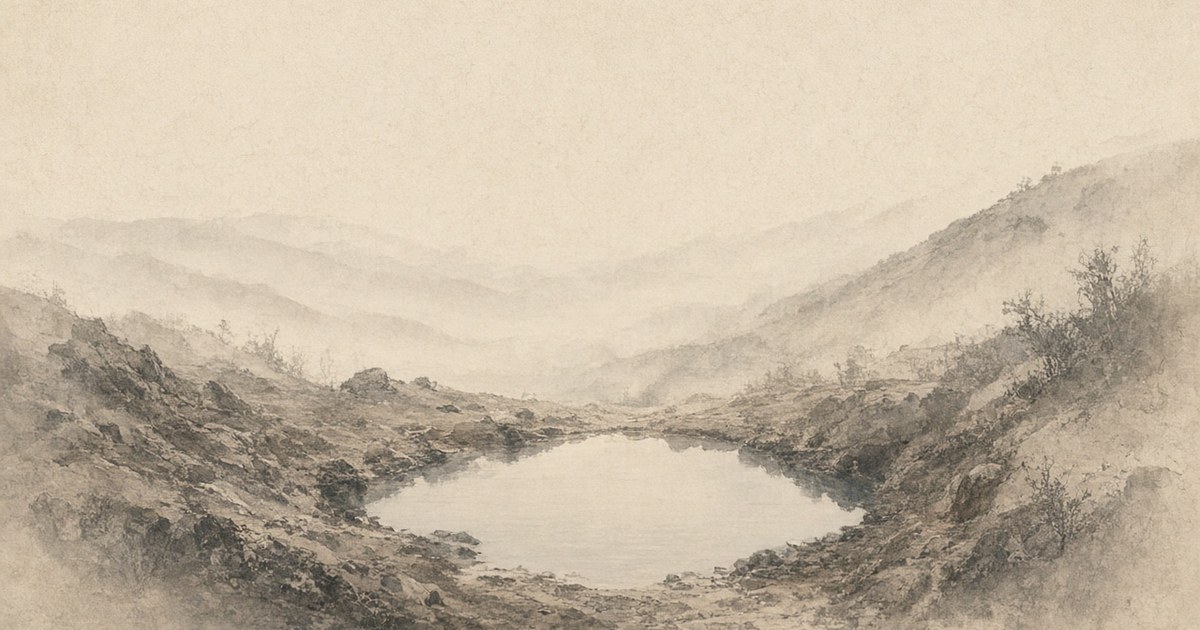
When you meet 「上善若水」—highest good like water—you are not collecting a soft-skills slogan. You are meeting Tao Te Ching Chapter 8's claim that the highest good benefits without contending and settles where people refuse to stand. Water does not climb for applause; it finds the low place and still nourishes. Your question is practical: what does that pattern ask of dwelling, mind, speech, work, and timing—without turning the chapter into a collage of motivational quotes.
What “highest good like water” points to for you
When you read shang shan ruo shui, you are meeting a standard of goodness measured by usefulness without rivalry. Water benefits the ten thousand things and does not contend for credit. It stays close to the Way by taking the place others avoid. You are not being told to become decorative calm; you are being shown a shape of virtue that nourishes without staging a contest.
You can test the line in ordinary rooms. If your help arrives only when it can be seen, you are still climbing. If your presence reduces friction and leaves no scoreboard, you are nearer the water pattern. Your measure is not how soft your language sounds—it is whether benefit and non-contention travel together.
Low place: why the chapter sends you downward
When Chapter 8 praises the low place, it is not romanticizing misery. People dislike low ground because it looks like loss of face, status, or control. Water settles there anyway, and that settling is why it stays near the Way. You are invited to notice where you refuse to stand—messy work, quiet roles, unglamorous repair—and ask whether pride is the real obstacle.
You should not confuse low place with self-erasure. The chapter’s water still benefits; it does not vanish into uselessness. Softness here is accurate placement, not idle spinning. Your day shrinks from constant self-elevation toward positions that actually serve what needs serving.
The seven excellences: goods you can practice
When the chapter lists seven goods, you receive a practical map, not a personality brand. In dwelling, be kind to the land; in mind, be deep; in giving, be humane; in speech, be trustworthy; in governance, be orderly; in work, be capable; in action, be timely. You are asked to distribute excellence across place, interior, relation, word, order, craft, and timing—so “like water” does not collapse into one vague adjective.
You can hold each excellence as a short check, not a performance script. Does your room respect the ground it sits on? Is your mind deep enough to refuse shallow panic? Does your gift arrive without bargain theater? Does your speech keep faith? Does your order serve people rather than posture? Can your work actually complete the needed thing? Is your move timed, or merely loud? Your honesty here matters more than memorizing Chinese labels for display.
Only by not contending, the chapter closes, can you stay without fault. That line does not promise moral perfection as a trophy. It warns that rivalry itself manufactures the fault you then race to repair. You protect the seven goods when you refuse to turn them into a contest of appearance.
Softness elsewhere—and what this page will not do
If you want the classic’s later pressure on water’s softness against hardness, you can sit once with Nothing Softer than Water and return here for Chapter 8’s non-contention and seven goods. You are keeping sister tones distinct: one chapter on highest good and low place; another on softness that still prevails. Your reading stays clean when each page keeps its own center.
You will not find here a restatement of the site’s wu-wei pillar, a quotes-hub collage, or Sun Tzu strategy dressed as Lao Tzu. You will not find buy language, invented keyword rankings, or soft-skills posters that strip the chapter of low place and non-contention. This essay stays with 「上善若水」 so you can practice one chapter deeply. Your next step is still the living chapter page—not another slogan card.
FAQ
What does “highest good like water” mean for you in Chapter 8?
You are being shown a pattern of goodness that benefits without competing and settles where people refuse to stand. Water nourishes the ten thousand things without climbing for credit, so it stays close to the Way. The image is not permission to drift; it is a standard for useful softness. Your test is whether help and non-contention arrive together in the same act.
Why does the chapter praise the low place you usually avoid?
You avoid low ground because it can look like lost status, messy labor, or invisible service. Chapter 8 treats that avoided place as where water—and nearness to the Way—actually settles. Low place is accurate positioning, not self-hatred or collapse. Your pride often blocks the very ground where benefit could work without theater.
What are the seven excellences in Tao Te Ching Chapter 8 for you?
You meet seven goods: kind dwelling, deep mind, humane giving, trustworthy speech, orderly governance, capable work, and timely action. Together they keep “like water” from becoming one vague mood. Each excellence is a short practical check across place, interior, relation, word, order, craft, and timing. Your practice deepens when you use the list as a map, not as decorative calligraphy.
Does “not contending” mean you should never speak up?
You are not being ordered into silence for its own sake. Non-contention means refusing rivalry as the engine of your help, speech, and timing—not abandoning necessary clarity. You can still name a need, finish a task, or set an order without turning the room into a scoreboard. Your check is simple: after you act, did benefit increase—or only your rank?
How is Chapter 8 different from soft-skills “be like water” advice?
You often meet modern posters that keep the water metaphor and drop low place, non-contention, and the seven goods. Chapter 8 is stricter: benefit without rivaling, settle where others refuse, and distribute excellence across concrete domains. Softness without those constraints becomes lifestyle wallpaper. Your reading stays honest when the full pattern—not a single pretty phrase—guides the week.
Should you read Chapter 78 with Chapter 8?
You can, if you keep their accents distinct. Chapter 8 centers highest good, low place, and the seven excellences; Chapter 78 presses water’s softness against hardness. One sitting on each page teaches more than mashing both into one motivational blur. Your sister reading helps only when each chapter keeps its own center.
How should you practice “highest good like water” this week?
You can choose one domain from the seven—speech, work, or timing—and watch where contention sneaks in. Notice one low place you usually refuse, and ask whether useful help could settle there without applause. Keep the sitting short; refuse to turn the chapter into a branding exercise. Your week becomes the lab: benefit without rivaling, then stop when the day is enough.
Read Chapter 8 on the living page
When you are ready to sit with the Chinese, translation, and the chapter’s own key lines—not another paraphrase—open Highest Good Like Water and read Chapter 8 slowly once. You are checking whether 「上善若水」 softens forced climbing or only decorates it. Let one short sitting show you if benefit without contending can reshape how you dwell, speak, work, and move tomorrow.